


Iran is the habitant of various wild animals and different plant species. Most animal species are harmless to man and we can spend time watching them without any risk and in complete safety.
These species are found in woods, plains and various spots of Iran. The Iranian wild life have important value and function in sustainability of ecosystems and materials and energy cycles in Iran. The existence of rare species or in the verge of extinction attracts many tourists to those spots. In order to preserve natural and important regions in Iran, several national parks are established in those regions that ban any commercial utilization of those regions. In our wild life tours, you can visit some species of animals which are in risk of extinction.
The most famous national parks in Iran
Golestan National Park in Golestan Province, Sorkhe- Hesar national Park in east Tehran, Kavir Semnan National Park, Khajir National Park.
Famous wildlife species in Iran
Persian yellow deer
The yellow deer of Iran is in the verge of extinction and this is a piece of news that has worried the environmentalists and fans of wild life. The high salinity of Ashk Island in Uremia Lake, the toxic wastes of oil companies in Chagha Zanbil, destruction of wild life habitual places in Arzhan Plain and urban and hospital wastes of Babol are the most important factors in the extinction risk of Persian Yellow Deer. These ruminant has long and wide horns, the size of its body is 150 to 250 cm and its tail is 16 to 20cm length.

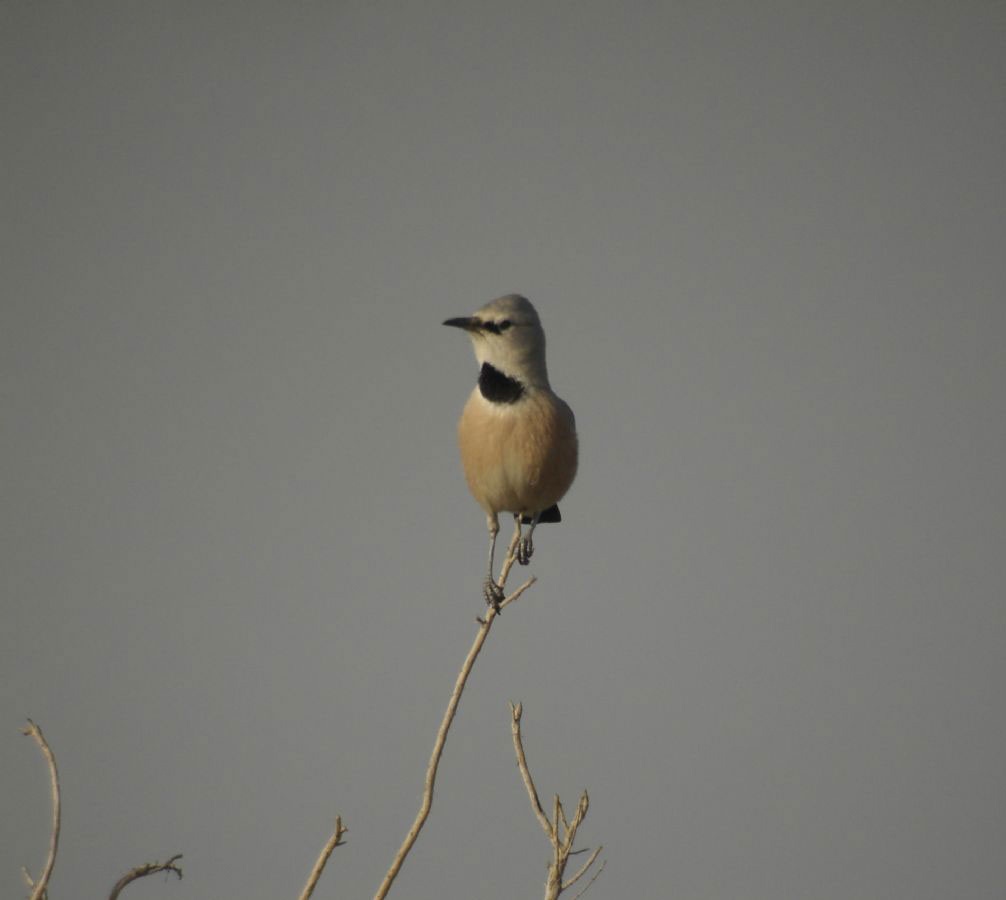
Pleske ground jay
Pleske Ground Jay Persian ground jay is a species of bird in the Corvidae family that is local to the desert and semi-desert regions and southeast Iran and is only found in Yazd and Semnan province as well as in Bardeskan in Khorasan Razavi Province. This bird is exclusively endemic to Iran. It has 24cm length, its tail and beak are black and the beak is slightly bent downward. The feathers and wings are buff-brownish, its face is paler in color and from the base of the beak to eyes, and a vein shape black spot is stretched. It has a large black spot on top of its chest. The wings are wide with two white ribbon-shape lines that show when it flies. The legs are long and black and are evolved for running in desert. In fact, this bird is more like lapwing or warbler than jays and crows.
The Asiatic Cheetah
The Asiatic cheetah is one of the most endangered cats on earth. The 50 to 100 living on the edges of Iran’s Dasht-e Kavir are all that remain of a population that once ranged from India to the Mediterranean. Cheetahs were prized by ancient Persian royalty, who trained them to hunt gazelles. It is this long history, and that Iran’s population of Asiatic lion and Caspian tiger has been hunted into extinction, that has made the cheetah the poster-cat of the country’s conservation movement.
With the support of the UN and the World Conservation Society, the government has designated land, mainly in Yazd and Semnan provinces, as parks and reserves, and has increased punishments for poaching. Tracking studies have been ongoing since 2001 and since early 2007 cheetahs and Persian leopards have been fitted with GPS collars. The Asiatic cheetah requires vast tracts of land to survive so the plan is to identify exactly where the cheetah roam and try to link the existing reserves to form a safe haven for the few remaining populations.
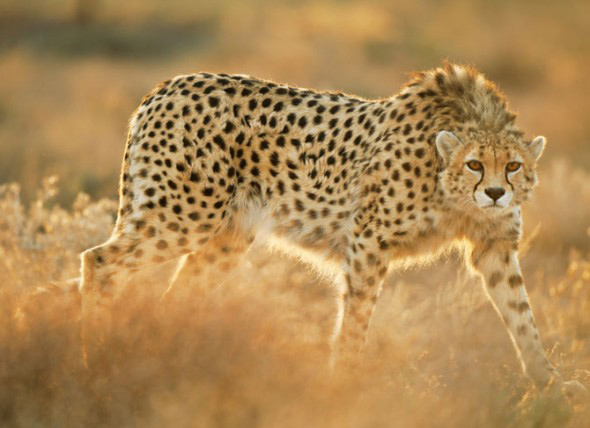
Unfortunately, severe habitat loss during the 1980s and the resultant loss of cheetah prey, traditionally jebeer and goitered gazelles, as well as wild sheep and goats, have forced the cats deeper into mountainous areas in search of more modest meals – such as hare and even lizards. In late 2007 one of the first two cheetahs fitted with a GPS collar was found dead in a mountain valley, killed by a Persian leopard as they hunted the same meal. On the positive side, education programs have significantly reduced poaching and the creation of protected areas is expected to help other native species to recover.
Birds
About 500 species of bird have been sighted in Iran, but only one – Pleske’s ground jay – is unique to the country. However, a small but growing number of birders are coming to Iran in search of montane or arid-land Middle East species that are hard or dangerous to find elsewhere. These include the Caucasian black grouse, Caspian snowcock, Radde’s accentor and several species of wheatear.
Iran is home to 22 wetlands that are protected under the Ramsar Convention. These are ideal places to see migrating land and water birds in their natural habitat, while en route between Europe and Africa. The range of water birds, ducks in particular, is impressive. While the numbers are far fewer than reported a few decades ago, there are still thought to be more than one million resident (for at least part of the year) in Iran.
Migratory water birds include the greater flamingo, once found in their thousands on Lake Orumiyeh in spring but less common now due to rising salination, as well as the glossy ibis and the Smyrna kingfisher. Other relatively common species include black-and-white magpies, blue rollers, brown-and-green bee-eaters, and black-and-grey hooded crows. Less common are the golden eagle, found in the Caspian provinces ; the tiny jiroft, found in Kerman province and along the Persian Gulf ; the red-wattled lapwing; the yellow partridge; the delijeh and balaban falcon , found mainly in Hamadan province ; and the black vulture and black kite, which live in the central plateau and deserts.


